Shizuku vs Dhizuku vs Sui: Which One Should You Pick in 2026?
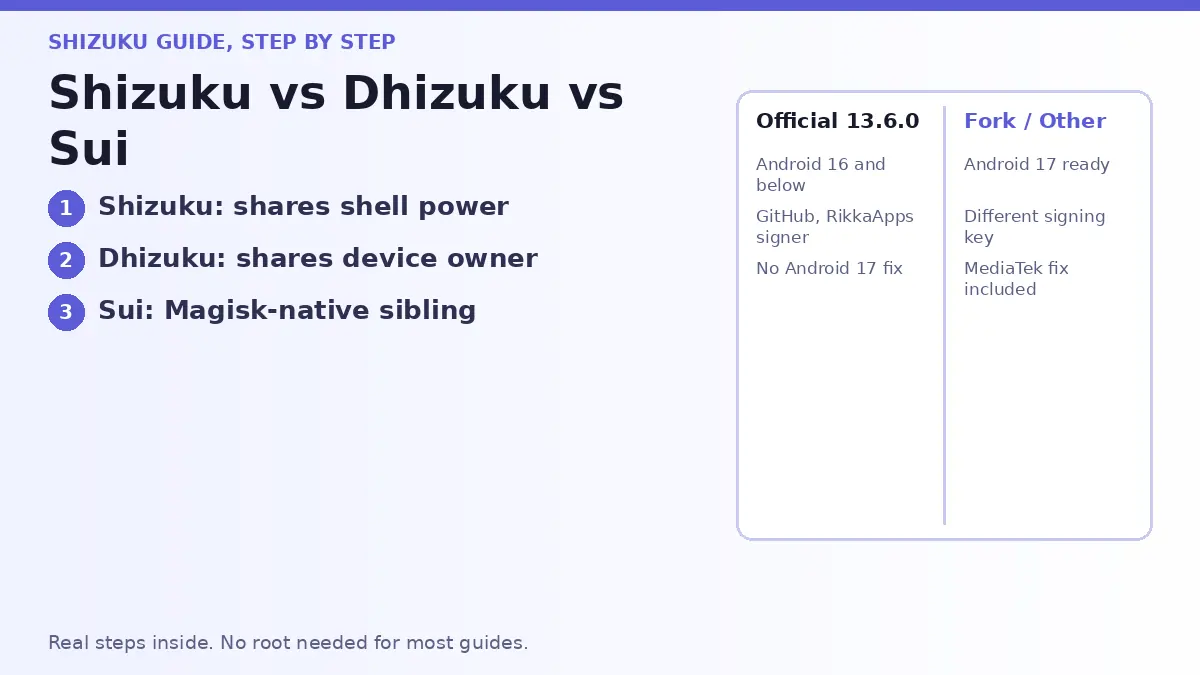
Shizuku vs Dhizuku vs Sui is a comparison of three ways to give an app more power than Android normally allows, and the three ways could hardly be more different. Shizuku lends ADB shell access (UID 2000) to approved apps without root and stops after a reboot. Dhizuku is a device-owner app that survives reboot without root but needs a fresh device to set up. Sui is a Magisk module that gives the same API as root.

Written by Omer Akbar, Author & SEO Expert - Fact-checked by Editorial Reviewer, 23 Nov 2026 - How we fact-check
Quick Answer, Shizuku vs Dhizuku vs Sui
Shizuku vs Dhizuku vs Sui comes down to privilege and setup. Shizuku gives ADB shell access without root but stops after reboot. Dhizuku is a device-owner app that survives reboot without root, yet needs a fresh device or factory reset to install. Sui is a Magisk module giving the same API as root, with no manager app, but it needs Magisk and root.
At a glance
Privilege: Shizuku, ADB shell (UID 2000) or root (UID 0). Dhizuku, device owner. Sui, root (UID 0). Needs root? Shizuku no (ADB mode), Dhizuku no, Sui yes (Magisk). Survives reboot? Shizuku no (unless root / trusted Wi-Fi / fork watchdog), Dhizuku yes, Sui yes. Setup: Shizuku, pairing code, 3 minutes. Dhizuku, fresh device / factory reset. Sui, Magisk install.
Dhizuku: device-owner persistence without root
Dhizuku's one big win is persistence: once set up as device owner, it survives reboot with no root. The cost is setup, Android allows only one device owner, so Dhizuku needs a fresh device or a factory reset. That makes it a poor fit for a phone already full of your data.
Sui: the same Shizuku API as root, with no manager app
Sui is a RikkaApps Magisk module that provides the same Shizuku API as root, with no manager app and no binaries in PATH. It injects into the system server to hand its Binder to apps, and developers write code once, the same Shizuku class works against the app or Sui. The management UI is reached via a Settings shortcut or the dialler code *#*#784784#*#*. It can trip Play Integrity, like root itself.
Verdict by phone state
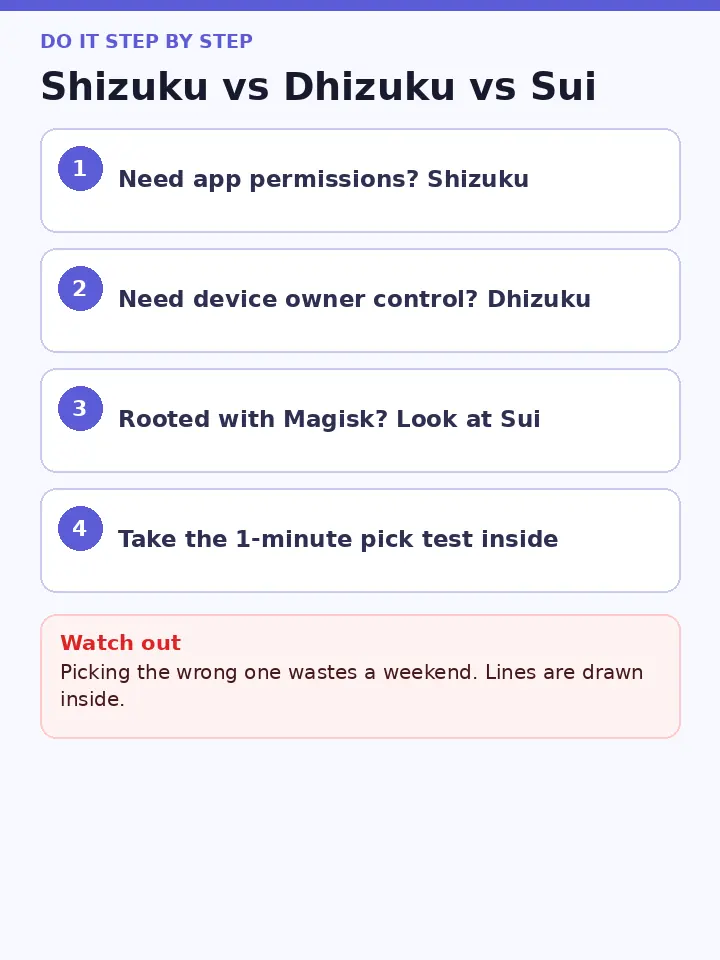
Most users: Shizuku. Setting up a fresh phone and want reboot persistence without root: Dhizuku. Already rooted and want the API with no manager app: Sui. Background: Shizuku vs root - Shizuku for developers.
Frequently Asked Questions
What is the difference between Shizuku and Dhizuku?+
Shizuku lends ADB shell access and stops after reboot; Dhizuku runs as device owner and survives reboot, but needs a fresh device or factory reset to set up.
What is Sui, and is it the same as Shizuku?+
Sui is a separate RikkaApps Magisk module providing the same API as root, with no manager app. Same API, different product, and it needs root.
Does Dhizuku need root?+
No. Dhizuku needs device-owner status instead, which is why setup needs a fresh device.
Which one survives a reboot?+
Dhizuku and Sui do. Shizuku in ADB mode does not, unless you use trusted Wi-Fi auto-start, root mode, or a fork watchdog.
Which is better: Shizuku, Dhizuku or Sui?+
Shizuku for most users. Dhizuku for persistence on a fresh phone. Sui for rooted users and developers.
About this guide
Shizuku vs Dhizuku vs Sui: ADB shell without root, device-owner persistence, or the same API as root via Magisk. Full comparison table and a verdict by phone state. This guide is part of shizukuapk.pages.dev, an informational resource about Shizuku APK by Xingchen & Rikka (RikkaApps). It does not host the APK file, downloads link to the official GitHub releases page.
Version, size and hash figures are dated 23 Nov 2026, re-check the GitHub releases page before installing.
Related Guides
Fact-Check, Verified 23 Nov 2026
Fact-checked by Editorial Reviewer (Reviewer & Editor), 23 Nov 2026 - Written by Omer Akbar. The claims on this page, versions, dates, hashes and compatibility statements, were checked against the primary sources on our Sources page, following our Fact-Checking Policy and classified under our Editorial Policy (Official / Reported / Rumor). Found an error? Tell us and it will be re-verified and corrected on this page.